
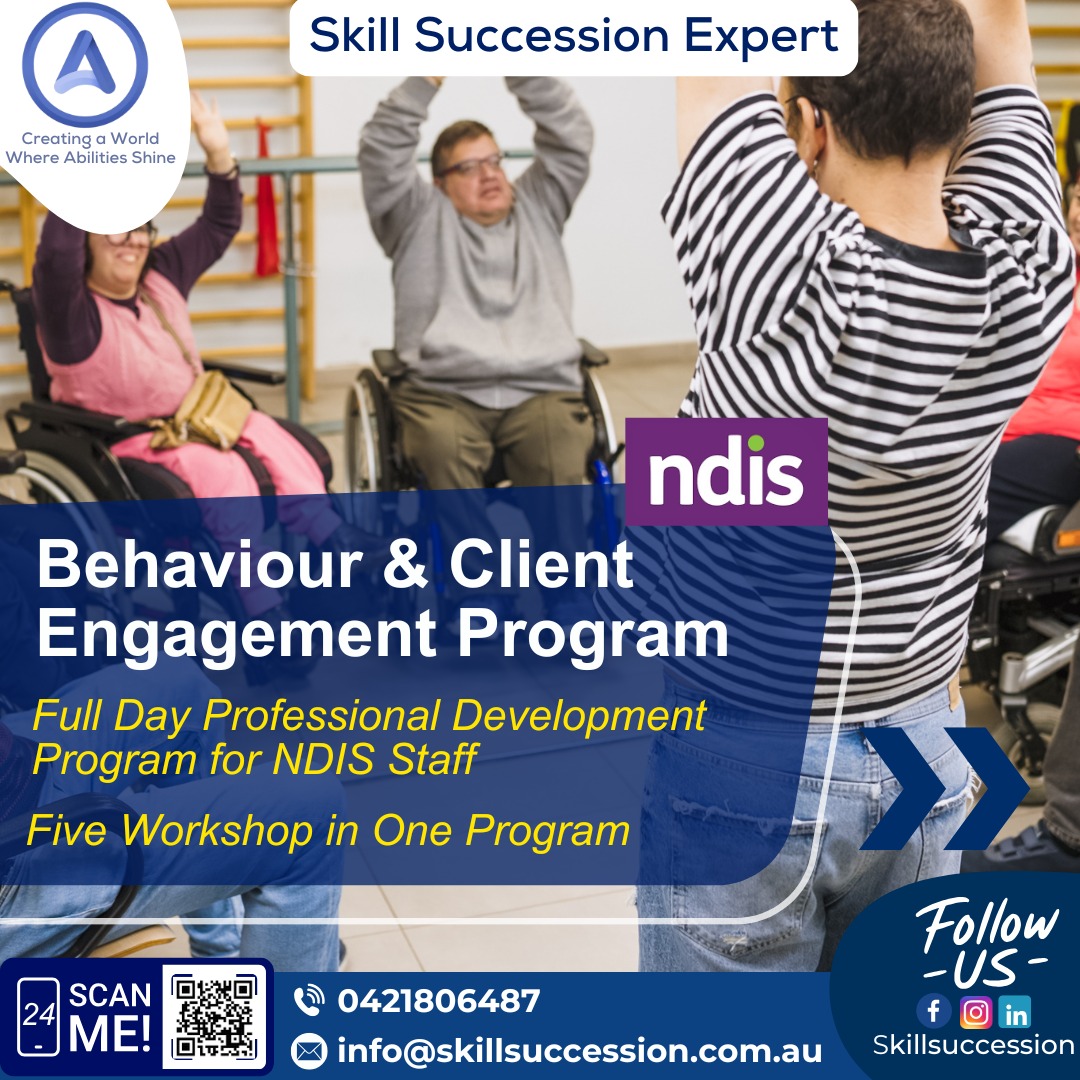


Detailed Program Document
Program Duration: 5–7 hours (Online Live or Face-to-Face Full-Day)
Target Audience: Disability support staff, teams working with clients with behavioural or emotional challenges
Module 1: Positive Behaviour Support (PBS) Basics
Learning Objectives: Understand PBS framework; implement practical strategies; promote positive client outcomes
Interactive Elements: Case studies; group discussion; Q&A
Key Strategies Provided: PBS templates; behaviour support plans
Module 2: Supporting Clients During Emotional Distress
Learning Objectives: Recognise distress signs; respond effectively and safely; apply supportive strategies
Interactive Elements: Role-play; scenario exercises; Q&A
Key Strategies Provided: Emotional support frameworks; engagement techniques
Module 3: Understanding Triggers and Early Intervention
Learning Objectives: Identify behavioural triggers; intervene proactively; prevent escalation
Interactive Elements: Group discussion; case studies; Q&A
Key Strategies Provided: Early intervention plans; trigger analysis tools
Module 4: De-escalation Techniques (Non-Pharmacological)
Learning Objectives: Apply non-pharmacological methods to calm situations; ensure safety for staff and clients
Interactive Elements: Hands-on exercises; role-play; Q&A
Key Strategies Provided: De-escalation strategies; communication guides
Module 5: Building Trust and Engagement with Clients
Learning Objectives: Develop positive relationships; enhance participation and cooperation; encourage client empowerment
Interactive Elements: Group activities; scenario discussions; Q&A
Key Strategies Provided: Trust-building frameworks; engagement strategies
Program Takeaways / Study Material: Comprehensive handouts, templates, checklists, practical strategies, takeaway study materials for future reference


Reviews
There are no reviews yet.